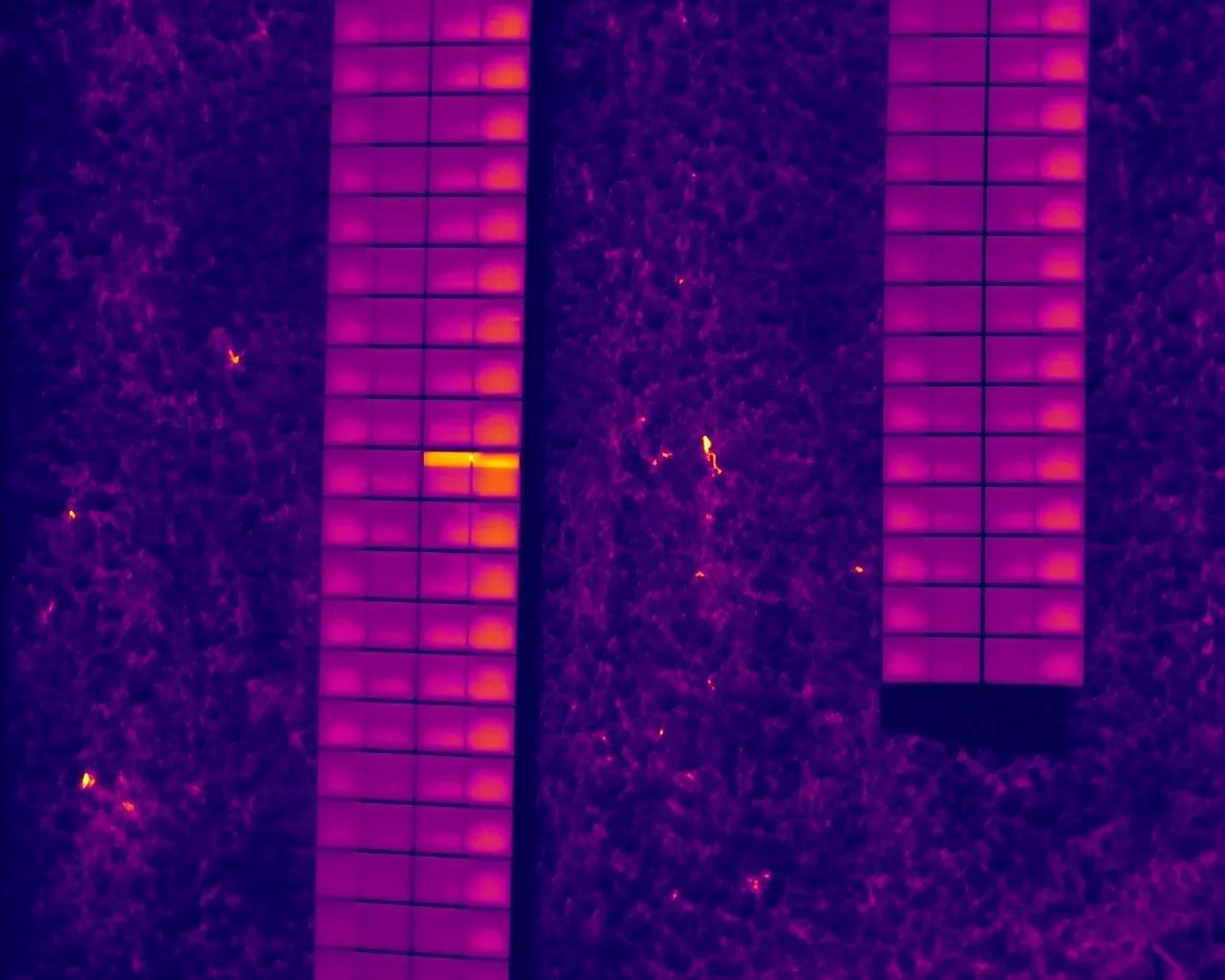
Not every problem is visible. Thermal imaging detects the temperature differences that precede most equipment failures - a loose connection, a wet roof deck, an underperforming solar string - weeks or months before anything shows up on a walk-around.
These subtle heat patterns can reveal hidden issues long before they become costly failures, which lets property owners, facility managers and maintenance teams make decisions on real data rather than on a hunch or a schedule.
Many equipment failures begin with a change in temperature. A thermal inspection helps identify developing problems before they result in expensive repairs, unexpected downtime or safety hazards.
- Roof moisture intrusion
- Hidden water leaks
- Missing or damaged insulation
- Electrical hot spots
- Loose electrical connections
- Overloaded breakers and circuits
- Transformer abnormalities
- HVAC performance issues
- Mechanical bearing wear
- Steam or process heat leaks
- Solar panel defects and underperforming modules
- Building envelope deficiencies
Traditional inspections mean lifts, scaffolding and personnel working at height. Most of that goes away.
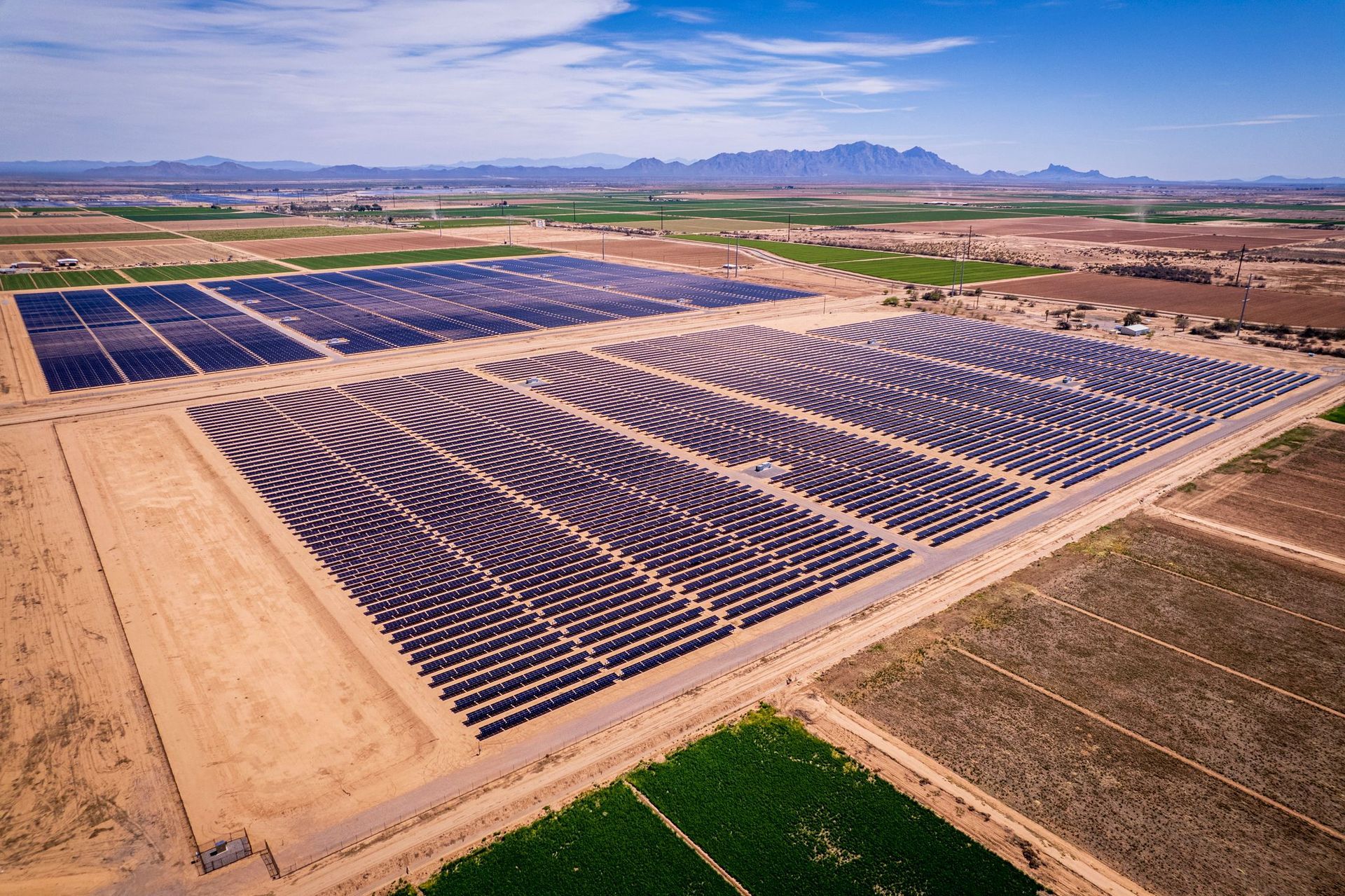
A solar farm or a warehouse roof is covered in a fraction of the time a walking survey takes.
Non-contact and non-destructive. In most cases nothing has to be shut down or opened up.
Radiometric thermal and high-resolution RGB collected on the same pass, so every anomaly has a photograph beside it.
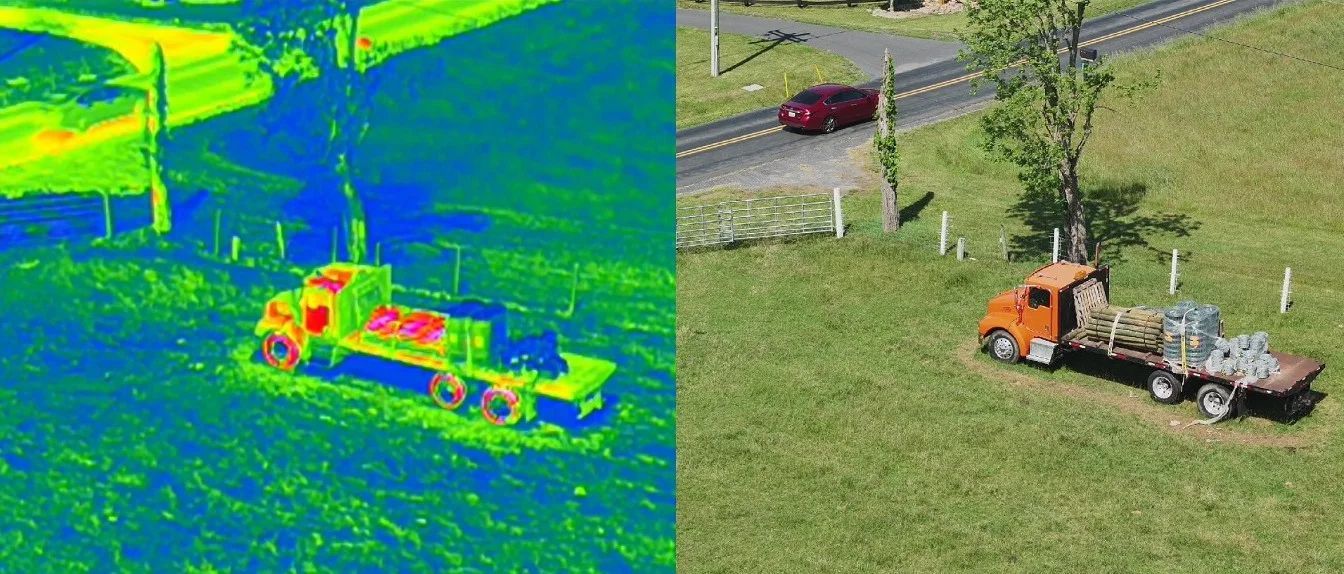
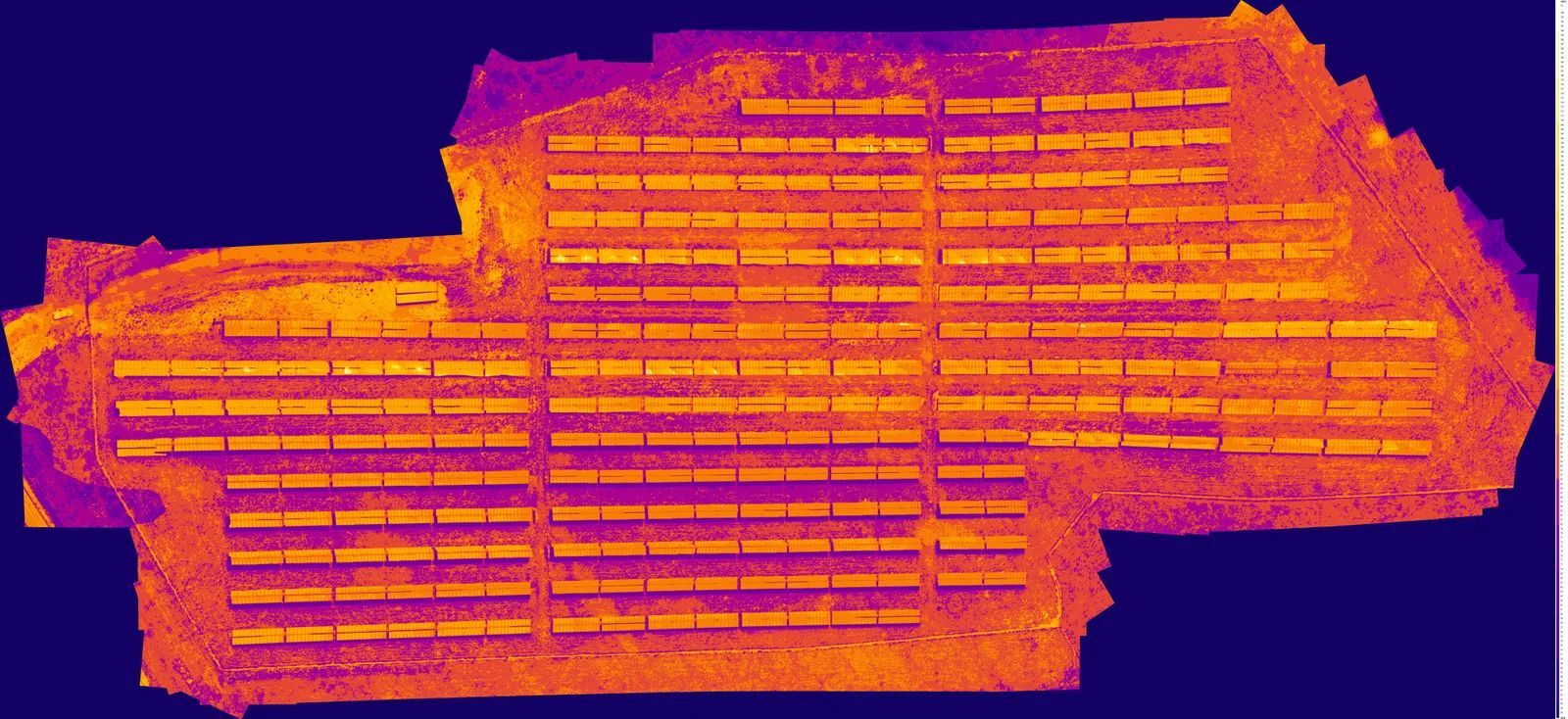
No. Thermal cameras do not see through solid objects. They detect infrared energy emitted from surfaces, allowing temperature differences to be visualized. Those differences can indicate hidden conditions that may require further investigation.
No. Thermal inspections are completely non-contact and non-destructive.
Yes. Professional thermal cameras are highly accurate when operated correctly and under appropriate environmental conditions. Proper flight planning and image interpretation are essential to obtaining meaningful results.
The ideal conditions depend on the type of inspection being performed. Roofs, solar arrays, electrical systems and building envelopes each have recommended inspection windows that produce the most reliable results. Tell me what you need looked at and I will tell you when to fly it.
Yes. Every inspection includes organized imagery and a professional report documenting observations and areas of concern.
Yes. The focus is commercial - solar, electrical, roofing, utility and infrastructure - but residential work is taken as it comes, including home solar systems and roofs.
Rapid deployment throughout the Shenandoah Valley, and the wider Mid-Atlantic region for larger projects. Ask.
Tell me what you are trying to find out and I will tell you honestly whether a thermal flight will answer it.