
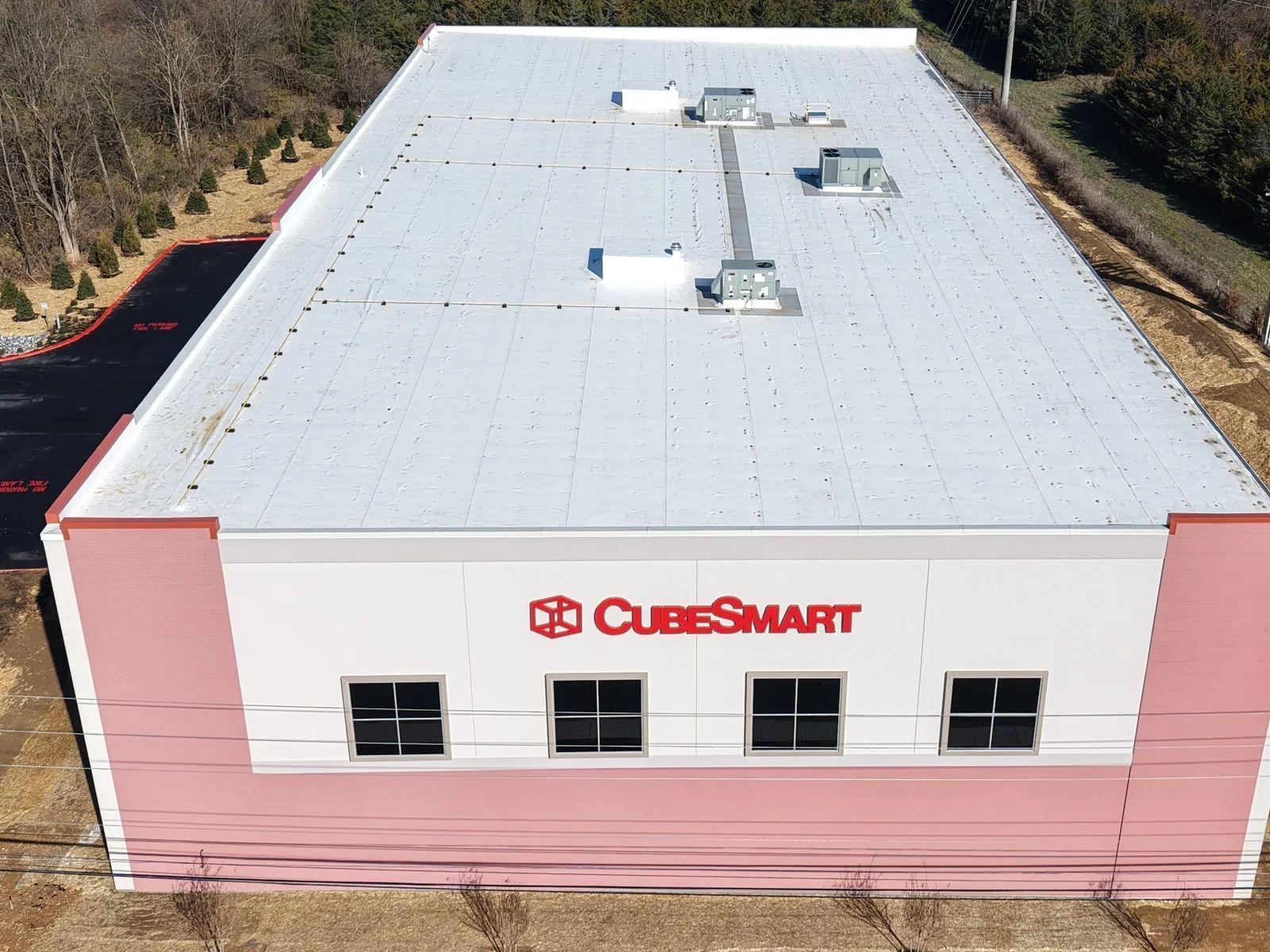
Wet insulation under a membrane holds heat. After the sun goes down a dry roof sheds that heat quickly and a saturated area does not, so for a window each evening the moisture map of a roof is plainly visible to a thermal camera and invisible to everyone standing on it.
That window is the whole job. It is why roof thermography is flown at a specific time under specific conditions rather than whenever someone is available, and it is the part of the work that 43 years of mission planning turns out to be directly relevant to.
The deliverable is an annotated map of the suspect areas with temperatures and visual imagery alongside - the document a roofing contractor needs to scope a repair, or an adjuster needs to process a claim.
- Flat commercial roofs
- Moisture intrusion detection
- Heat loss analysis
- Storm damage assessment
- Insurance documentation
- Moisture intrusion and saturated insulation
- Heat loss and missing insulation
- Membrane and seam failures
- Ponding and drainage problems
- Storm and hail damage documentation
- Flashing and penetration defects
We discuss your goals, your concerns and what the inspection actually needs to answer.
Weather, airspace, site access and safety are evaluated before anything flies. This is the part most operators skip.
FAA-compliant flight operations. Thermal and high-resolution visual imagery collected with professional-grade equipment.
Thermal imagery is reviewed for temperature anomalies and areas that warrant further evaluation.
A detailed report with annotated imagery, observations and findings you can hand to a maintenance team or an adjuster.
Tell me the site, the size and roughly when, and I will come back with a number and a recommended flight window.