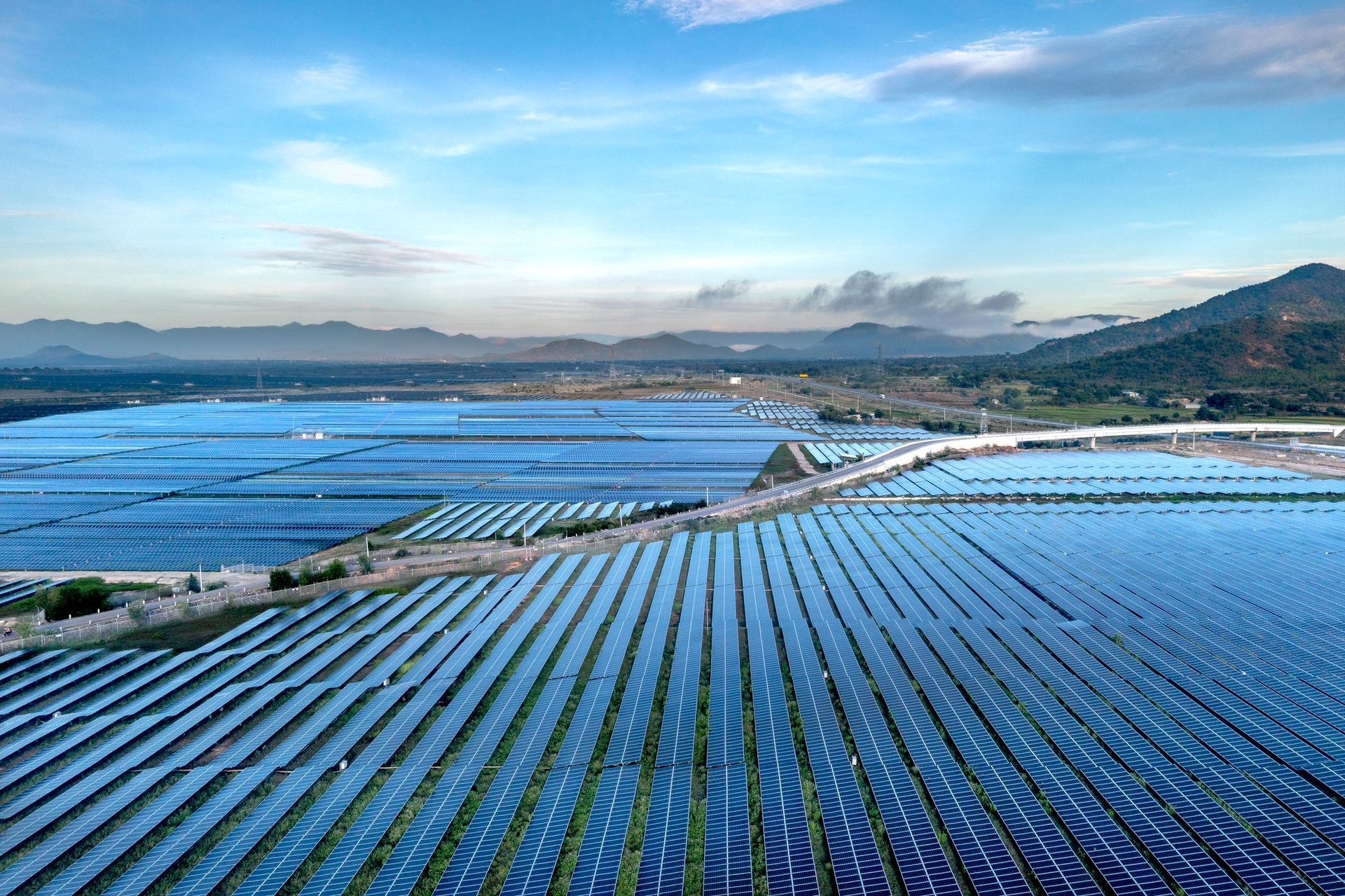
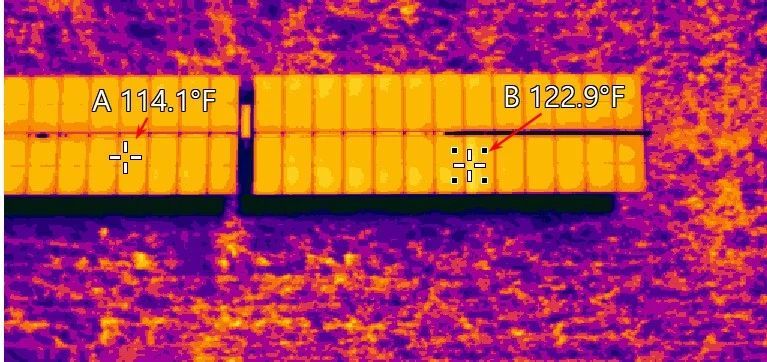
A solar array fails quietly. A cracked cell, a failed bypass diode, a shaded or soiled module, a bad string connection - none of it announces itself, and none of it shows on a walk-around. What it does do is run hot, and a radiometric thermal camera sees that from the air in a single pass.
Blue Horizon Drone flies solar with a DJI Matrice 4T, collecting radiometric thermal and high-resolution visual imagery simultaneously. Every anomaly comes back with a temperature, a location in the array and a photograph, so an O&M crew knows which module to walk to rather than which field to search.
The work suits commissioning acceptance, annual O&M surveys, warranty claims and pre-purchase due diligence. For a farm of any size it is faster than a handheld survey by an order of magnitude, and it does not require taking the array offline.
- Utility-scale solar farms
- Commercial solar arrays
- Residential solar systems
- Hot spot detection, string and module analysis
- Commissioning and O&M support
- Hot spots and cell-level defects
- Failed bypass diodes
- Underperforming or dead modules
- String and combiner faults
- Soiling and shading losses
- Junction box failures
- Cracked or delaminated panels
We discuss your goals, your concerns and what the inspection actually needs to answer.
Weather, airspace, site access and safety are evaluated before anything flies. This is the part most operators skip.
FAA-compliant flight operations. Thermal and high-resolution visual imagery collected with professional-grade equipment.
Thermal imagery is reviewed for temperature anomalies and areas that warrant further evaluation.
A detailed report with annotated imagery, observations and findings you can hand to a maintenance team or an adjuster.
Tell me the site, the size and roughly when, and I will come back with a number and a recommended flight window.